Best smart thermostat · Amazon prices checked 2026-10-17; ENERGY STAR list 2026-09-14, field studies read 2026-09-15
Best Smart Thermostat: Checked Against the ENERGY STAR List and the Field Studies
117 ENERGY STAR certified rows (84 models) · 22 Amazon bestsellers decoded · 6 field studies and 4 standards read · six certified picks, priced on Amazon 2026-10-17
Buy on the certification and on what the listing says about your wiring and your backup heat (the C-wire is the fifth wire, the one that carries constant power; the backup heat is the electric strips behind a heat pump), not on the percentage printed on the box. ENERGY STAR certifies a connected thermostat when its field data shows at least 8% less heating run time than the same home never setting back; the program's plain-language average is 8% of the heating and cooling bill, about $50 a year. Of 22 Amazon bestsellers, 19 are on that list and 3 are not. Twelve of them print a savings figure, 7 of them 23% or 26% and two of them 31%; ecobee says on its own site that its figure has not been independently verified. The one mechanism with an independent field result behind it is managing the electric backup heat on a heat pump, 12% across 185 Oregon homes, and 4 of the 22 listings name that stage at all.
- 8%, not 31%
- the backup heat is the lever
- C-wire first
- no line voltage here
- six certified picks
The picks at a glance · certified figures, Amazon prices on 2026-10-17
-
Best for most furnace-and-AC homes
Google Nest Thermostat
$99.99 · ENERGY STAR listed · 0.1 W standby ($0.14/yr) · C-wire: not required (most systems) — required on a heat pump · 2.0 yr at ENERGY STAR's $50/yr average
ENERGY STAR listed, 0.10 W standby, and its listing says most conventional systems run it without a C-wire. Its own text names the exceptions — a heat pump, a heat-only or a zoned system still needs the wire — and the technicians in the panel say wire it regardless. The same certification the $247 units hold, for $99.99.
Check price on Amazon -
Best for a heat pump with electric backup
Google Nest Learning (4th gen)
$233.99 · ENERGY STAR listed · 0.1 W standby ($0.14/yr) · C-wire: not required (most systems) · 4.7 yr at ENERGY STAR's $50/yr average
Google's spec page states heat-pump staging in full, up to three stages with auxiliary or alternate and emergency heat, and the 12% Oregon result was measured on Nests managing that stage. Honeywell's T9 page states emergency heat too; the Nest is the pick because the field result sits on this lineage. Sensor in the box, 0.10 W standby.
Check price on Amazon -
Cheapest certified thermostat sold by Amazon
Sensi Lite ST25W
$79.99 · ENERGY STAR listed · 0.11 W standby ($0.15/yr) · C-wire: not required (most systems) — required on a heat pump · 1.6 yr at ENERGY STAR's $50/yr average
$79.99, sold by Amazon, and on the same certified list as the $247 units. No sensors, and the wall has to be a conventional furnace or have the wire.
Check price on Amazon
The picks by system type, with the reasoning, are in section 08. Affiliate links; we earn a commission at no cost to you.
01 / What this page adds
Nine numbers from the certification list, the listings and the field studies
Four are computed from the decode table lower on the page, two are the certified list itself, one is the certifying program's own bar, and two are field results that link to the report.
- 19 of 22
19 of the 22 bestselling smart thermostats on Amazon are on the ENERGY STAR certified list. The 3 that are not (LUX, Aqara, meross) are Matter or HomeKit devices sold on integration, and their listings make no ENERGY STAR claim. 4 listed models never mention the certification. 1
The top results for five Amazon searches on 2026-09-15, nine per search, deduplicated to 22 ASINs and matched by brand and model code against the 117-row ENERGY STAR connected-thermostat dataset pulled the day before.
- 13 of 22
A price on Amazon is often not Amazon's price. On the build date the buy box belonged to a third-party marketplace seller on 13 of the 22 listings, and 9 carried a future ship date rather than stock. The 22 listings also cover 17 distinct products: five are a second colourway of a unit already in the set, and one is a two-pack. 1
Buy-box seller and price as a shopper sees them on 2026-10-17; availability and parent ASIN from the Creators API item record the same day. Counts on this page are per listing, because the listing is what makes the claim; the product count is here so the denominator is not mistaken for a model count.
- 4 of 22
15 of the 22 listings say they work with a heat pump. None uses the words 'auxiliary heat' or 'emergency heat': three say 'heat pump with electric backup' and one says 'dual fuel'. That backup stage is where the money is. The independent evaluation of a 185-home Oregon pilot measured a 12% cut in electric heating, 781 kWh a year per home; the attribution of that cut to the thermostat's management of the stage is the maker's white paper, not the evaluator's own words, and ENERGY STAR makes every heat-pump-capable certified model log its run time by the hour. 2
Each listing's title and bullets read by hand for 'heat pump', 'auxiliary heat', 'emergency heat', 'electric backup' and 'dual fuel'; the quote behind every cell is in the decode file. The Oregon figure is the Energy Trust pilot as reported in the Nest 2015 white paper.
- 8%
ENERGY STAR's certification bar is at least 8% less heating run time and 10% less cooling run time, measured against a modeled baseline of the same home never setting back; its plain-language average is 8% of the heating and cooling bill, about $50 a year. 12 of the 22 listings print a savings figure: 7 say 23% or 26%, and both Nest Learning listings say up to 31%. 8
Program Requirements V1.0 and the Method to Demonstrate Field Savings V1.0, both read in full; the FAQ page for the $50 figure; listing text for the claims.
- 12.5% vs 5.0%
One randomized pilot put a smart thermostat against a standard programmable one in the same utility and the same season: 300 homes got a Nest and a separate 300 got a professionally installed programmable. The smart unit saved 12.5% of gas heating, the programmable 5.0%. On cooling the two were indistinguishable, 13.9% against 13.1%. 3
Cadmus evaluation for Vectren Energy, Indiana, 300 homes per arm, as reported in the Nest 2015 white paper.
- 0%
The largest randomized field experiment found no statistically or economically significant change in energy use across 1,385 households over 18 months; some specifications showed electricity up 2.3% and gas up 4.2%. The authors attribute the gap to occupants overriding the schedule; the analysis rests on more than 16 million hourly electricity readings. 14
Brandon, Clapp, List, Metcalfe and Price, NBER Working Paper 30482, abstract and the Becker Friedman Institute summary.
- 0.8–5.2 yr
At ENERGY STAR's national average of about $50 a year, the six picks pay for themselves in 1.6 years ($79.99) to 4.9 years ($246.99); ComEd's 2025 rebate of $75 would have covered all but $4.99 of the cheapest. EPA says in the same breath not to apply its national average to any one home, so read this as the shape of the decision, not a forecast: even the cheapest certified pick takes about 19 months to pay back, longer than the 18 months over which the largest randomized experiment measured nothing at all. 10
Sticker price ÷ $50/yr, the ENERGY STAR FAQ figure, and against ComEd's 2025 rebate of $75. Prices are Amazon's on 2026-10-17.
- 0.04–2.59 W
The 117 certified rows draw between 0.04 and 2.59 W in network standby, $0.06 to $3.63 a year at 16¢/kWh; the median row draws 0.60 W, $0.84 a year. The bestsellers span 0.10 to 2.59 W. It is the one running-cost number the certification publishes per model, and it is small. 12
Certified watts from the ENERGY STAR dataset × 8,760 h × $0.16/kWh, the standing electricity rate this site uses on every page so figures compare; your own rate is on your bill.
- 10 of 22
On the wire that powers the radio: 7 listings say a C-wire is required and offer nothing to get around it, 2 require one but put a free adapter or a voucher for it in the box, 2 include the adapter that creates one, 2 sell that adapter separately, 1 says only some wiring needs it, 7 say most systems manage without, and 1 does not say. Of the 7 that manage without, 4 name the exception in their own text: a heat pump, a heat-only or cool-only system, or a zoned system needs the wire anyway. 1
Listing text read by hand for each of the 22 ASINs, with the verbatim fragment recorded beside every cell in the decode file.
- 0.06–1.79°F
Certified temperature accuracy across the 117 rows runs from ±0.06°F to ±1.79°F, median ±0.52°F, against a program cap of 2.0°F. Among the bestsellers it runs ±0.09°F to ±1.28°F. A thermostat that reads low holds the house warmer than the number on its screen for the whole season, which is the same direction as the saving the certification measures and is not netted against it. 12
static_temperature_accuracy on every certified row; the bestseller range from the 22 decoded models. No study in our set measures what a given bias costs, so no dollar figure is attached to it here.
The C-wire stance each panel source takes
Certified standby power, the six picks
02 / The field studies
What each study measured, heating and cooling
Left, heating savings by source with the sample behind each. Right, cooling. The two maker claims are plotted for scale; the randomized experiment that found nothing is in the caption, because zero does not draw a bar.
Heating savings (%)
Cooling savings (%)
03 / Which wiring
Seven kinds of wall, sorted by what powers the thermostat
A smart thermostat is a radio and a screen that need continuous power. Whether your wall can supply it decides more than any feature. Count the wires behind your old thermostat before you shop: the C, or common, wire is the fifth one, and it is the one that carries power rather than a call for heat.
| Kind | What it needs from your wall | What happens without it | Bestsellers of this kind |
|---|---|---|---|
| C-wire required | Five wires at the wall, one of them C (common), or an adapter run from the furnace board that you buy yourself. | The unit will not power on, or powers on and drops off Wi-Fi. Amazon prints it in the product title; Honeywell's X2S, RTH9600WF, T5 and T6 Pro and the Sensi Touch 2 print it in the bullets. | 7 of 22 |
| Required, but the adapter is free | Same requirement; Honeywell's X8S pair puts a voucher for a free C-wire adapter in the box. | One mail-in step and a trip to the air handler, at no extra cost. | 2 of 22 |
| Adapter in the box | Four wires; the adapter (ecobee's Power Extender Kit) mounts at the furnace board and creates the fifth. | The adapter is why these units say they work without a C-wire. | 2 of 22 |
| Adapter sold separately | Four wires and the same adapter, at your cost: ecobee's Essential and the Aqara W200 both point at a kit they do not ship. | Budget for the kit, or find the wire. The listing price is not the installed price. | 2 of 22 |
| Works without on most systems | Four wires; the thermostat draws a little power through the heating or cooling circuit while it is idle. | Fine on a gas furnace with AC. On the technicians' account in r/homeautomation, that power draw is what pulls transformers and control boards out of spec when the wire is missing. Heat pumps, heat-only and cool-only systems and zoned systems need the wire anyway, and 4 of these 7 listings say so themselves. | 7 of 22 |
| Only some wiring needs it | The meross Matter unit is the one listing that puts it this way: some wiring configurations need a C wire, which it does not include. | You will not know which case you are in until the wires are off the wall. Photograph them first. | 1 of 22 |
| The listing does not say | LUX's TQX prints no wiring requirement at all. | Assume you need the wire until the maker's own compatibility page says otherwise. | 1 of 22 |
| Line voltage (120 or 240 V) | Two or four thick wires and a wall box: electric baseboard, wall heaters, some radiant floors. | None of the 22 bestsellers fits this, and five of them say so in their own text. ENERGY STAR's connected-thermostat program stops at 30 V; a line-voltage smart thermostat (Mysa is the one the community names) is a different product and not on this page. | 0 of 22 |
What the count comes to
The C-wire question decides the install before any feature does. Of the 22 bestsellers, 10 need one, counting the 2 that ship a free adapter and the 1 that needs it on some wiring; 2 include the adapter, 2 sell it separately, 7 say most systems do without, and 1 says nothing at all. If you have a heat pump, read the fine print of the 'no C-wire' units: 4 of the 7 name a heat pump as the case that needs the wire.
Both Nest listings say most homes need no C-wire and then name a heat pump as a case that does; Amazon prints the requirement in its product title; Honeywell's X8S pair requires one and puts a voucher for a free adapter in the box. 1
04 / Who it is for
Which systems a smart thermostat runs, and which it does not
The thermostat is a switch for the low-voltage control circuit the equipment already has: the listings call it 'most 24 V systems', and ENERGY STAR certifies nothing above 30 V. The question for each system is whether that circuit is what controls it, and whether the thermostat can drive the stages the system has.
- Works Gas or oil furnace with central AC — The system every bestseller is designed around: one or two heat stages, one or two cooling stages, a fan. The 12.5% Indiana heating figure and the 13.9% cooling figure come from homes like this. Any listed unit works; the C-wire is the only wrinkle. 3
- Works Heat pump with electric auxiliary heat — The one system where the thermostat's settings change the bill. The electric strips that back up the compressor use, in the Energy Trust of Oregon specification's words, substantially more energy than the heat pump technology, so what matters is a thermostat that keeps them off above a set outdoor temperature (the Energy Trust of Oregon specification uses 35°F) and recovers gently enough not to call them. Check the maker's own page for how it handles that stage: a listing that only says 'works with heat pumps' is not telling you. 19
- Works Dual fuel (heat pump plus gas furnace) — Needs a thermostat that can switch between the compressor and the furnace at an outdoor temperature you set. One bestseller listing names dual fuel: ecobee's Essential. Honeywell's T6 Pro lists 2 heat / 1 cool heat-pump staging without naming dual fuel. Confirm on the maker's compatibility checker before buying. 1
- partly Boiler, radiators or hydronic floor — Two-wire heat-only circuits run most smart thermostats, but heat-only is exactly the case where the 'no C-wire' units need a C-wire or adapter. Radiant floors respond over hours, so a setback saves less and costs more comfort than the same setback on forced air. 20
- partly A whole-house humidifier, dehumidifier or ventilator on the same wiring — 70 of the 117 certified models sense humidity, but sensing is not controlling: only a handful state humidify, dehumidify or ventilation control as a feature, and the accessory needs its own terminal at the thermostat. Check the maker's wiring page for an ACC or HUM terminal before you assume the new unit will run what the old one ran. 12
- Wrong tool Electric baseboard, wall heaters, line-voltage radiant — 120 or 240 V at the thermostat. None of the 22 bestsellers switches it and the ENERGY STAR program does not certify above 30 V. You want a line-voltage smart thermostat, one per heater, which is a separate purchase and a separate page. 8
- Wrong tool Ductless mini-split or PTAC — Most carry their own controls and infrared or proprietary remotes, and a low-voltage wall thermostat does nothing unless the maker sells a wired interface. Two of the 22 bestsellers, the LUX TQX and the Aqara W200, do list PTAC compatibility; for everything else the route is the maker's Wi-Fi adapter or an infrared bridge.
05 / How it saves
Setback saves because a cooler house loses less heat; a heat pump complicates it
Heat leaves a house in proportion to the gap between inside and out, so every hour at a lower setpoint is an hour of smaller loss. A thermostat saves by cutting that gap while you are asleep or away and by not overshooting when you come back. On a furnace that is the whole mechanism. On a heat pump there is a second one, and it is bigger.
- ENERGY STAR certification bar, heating
- ≥ 8%less heating run time than a modeled never-set-back baseline, lower 95% bound; 10% for cooling 8
- Second bar the program applies
- 80% of homesmust save at least 4% heating and 5% cooling 8
- Energy Trust of Oregon specification, auxiliary-heat lockout
- 35°Fthe strips stay off above it; the specification's words are that aux heat 'uses substantially more energy than the heat pump technology' 19
- Certified models
- 11784 models from 35 brands; 54 geofence, 54 take a remote sensor, 61 read outdoor temperature 12
- The program ENERGY STAR's method compares each home's measured run time against that same home held all day at its occupants' own 90th-percentile heating setpoint. It is a 'versus never setting back' comparison, not 'versus a $25 programmable'. 9
- The heat pump A large morning recovery on a heat pump can call the electric strips, which the Oregon program specification says use substantially more energy than the heat pump technology. Managing that call is what the maker's white paper credits for the Oregon pilot's 12%; a thermostat that only runs a schedule can cost you. 2
- The person Every saving above assumes the schedule survives contact with the household. In the 1,385-home randomized experiment it did not, and the measured effect was nil. 14
06 / The routine
How to set it up so the saving is real
The field results that show savings came from thermostats whose schedules were set once and left alone, and, on heat pumps, from auxiliary-heat management. Those two conditions are the difference between the 12% pilots and the 0% experiment.
- Before you buy Photograph the wires behind the old thermostat. Count them and read the letters. R, W, Y, G and C is the full set; four without C means you need an adapter-in-the-box unit, a 'works without' unit on a conventional furnace, or an electrician. Two wires (heat only) or a heat pump means you need C regardless of what the box says.
- Install day Tell it the truth about the system. Heat pump or conventional, one stage or two, whether there is auxiliary heat and what fuel it burns. A heat pump set up as a conventional furnace runs the compressor and strips together on every call.
- Install day, heat pumps Set the auxiliary and compressor lockouts. The Energy Trust of Oregon specification keeps the strips off above 35°F outdoor; set yours where the maker's own tool says, and never set the compressor lower than the unit is rated for. Keep the setback small enough that the house recovers without calling the strips. This stage is where the 12% came from.
- Week 1 One schedule, modest setbacks, then hands off. On a furnace, the long-standing guidance is 7–10°F back for eight hours, which is where the 5–15% range comes from; we quote it as reproduced in the Nest 2015 paper, because DOE's own page would not load. On a heat pump, less. Every manual override is logged and, in the randomized experiment, overrides are where the savings went.
- Month 1 Read the run-time report, not the savings badge. Certified units log heating and cooling run time; that number is what ENERGY STAR measures. A 'you saved 20%' badge is the maker's model, not a bill. Compare degree-day-adjusted run time against last year's bills if you have them.
- Every heating season Re-check the heat-pump lockouts and the utility rebate. Of the two programs we read, ComEd's 2025 program paid $75 against the certified list and closed to applications on 28 February 2026; Duke Energy Progress pays $150 the first year for letting the utility nudge the setpoint on peak days, with no certification required. Check both kinds before you assume the list is the gate.
07 / Combinations
What to pair a smart thermostat with, and what it cannot control
The pairings cover the two things the thermostat cannot see on its own: the rooms it is not in and the equipment it is not wired to.
| With | Verdict | How | Why |
|---|---|---|---|
| Remote temperature sensor | Pairs well | One in the room that runs hot or cold; average or follow-occupancy mode. | The thermostat only knows the hallway. 9 of the 22 bestsellers take a sensor; 54 of the 117 certified models list the feature. No field study in our set isolates the sensor's saving, so buy it for comfort, not the bill. 12 |
| Utility rebate | Pairs well | Check your own utility before buying: a purchase rebate is usually gated on the certified list, a demand-response credit on whether the utility's platform speaks to the brand. | In the two programs we read the money is $75 (ComEd's 2025 program year, against the certified list; that year closed to applications on 28 February 2026) and $150 the first year (Duke Energy Progress, for demand-response enrollment, certification not required). Of the three unlisted bestsellers, Lux is on Duke's compatible-brand list; Aqara and meross are on neither. 11 |
| C-wire adapter | Pairs well | At the furnace board, following the maker's diagram; ecobee's PEK and Honeywell's adapter are the common ones. | Continuous power is the prerequisite for everything else. It does not save energy by itself. 20 |
| Outdoor temperature (weather feed or sensor) | Pairs well | Most certified units pull it from the internet; 61 of 117 list outdoor temperature detection. | The heat-pump lockouts are keyed to outdoor temperature. Without it the thermostat cannot decide when the strips are worth it. 19 |
| Deep setbacks on a heat pump | Keep apart | — | A deep overnight setback calls the electric strips on most systems when the house recovers. Keep it small, or let the thermostat's own heat-pump logic size it. 19 |
Sensor counts are from the listings and the certified list; savings from sensors are not established by any study in our set.
08 / The picks
Six certified picks
We did not install these. See the method note.
One listed unit per job: two by system type, the rest by wiring, budget and ecosystem. Each is here because it is on the ENERGY STAR certified list, had an Amazon price on the build date, and its own listing or maker page answers the question its job asks. The three unlisted bestsellers are not here; the cheapest of them, meross at $57.99, is $22 under the cheapest certified pick here and carries no certification for a rebate to check.
Every "Check price" link below is an affiliate link: if you buy, we earn a commission at no extra cost to you. It does not change which units are here — the picks are chosen on the certified data and the listing text, and no brand paid for a place.
-
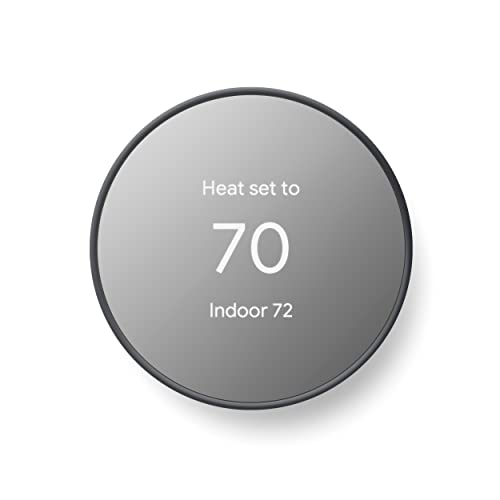
Most furnace-and-AC homes, four or five wires
Google Nest Thermostat
$99.99 · ENERGY STAR listed · 0.1 W standby ($0.14/yr) · C-wire: not required (most systems) — required on a heat pump · 2.0 yr at ENERGY STAR's $50/yr average
Listed, 0.10 W standby, $99.99, and its listing says most conventional systems run it without a C-wire. No remote sensor and no learning, which the certification does not ask for either.
Google Home app; it is Matter certified, so it joins an Apple or Samsung home through a Matter controller rather than natively.
-

Heat pump with electric backup
Google Nest Learning (4th gen)
$233.99 · ENERGY STAR listed · 0.1 W standby ($0.14/yr) · C-wire: not required (most systems) · 4.7 yr at ENERGY STAR's $50/yr average
Google's spec page states the staging in full: a heat pump up to three stages with one or two stages of auxiliary or alternate heat, and emergency heat. Honeywell's T9 page states emergency heat as well, so this is not a Nest-only capability — the Nest is the pick because the one independent field result on backup-heat management was measured on Nests. Listed, Matter, 0.10 W standby, sensor in the box, and its listing says most homes need no C-wire.
$233.99, $134 more than the plain Nest Thermostat. The silver variant of the same unit lists at $229.99, also sold by Amazon. Its listing prints 'up to 31%', the largest claim in this set and the one with no published method. Certified accuracy ±0.09°F, second on the list to Vivint's ±0.06°F, which changes nothing about the bill.
-

Cheapest listed unit
Sensi Lite ST25W
$79.99 · ENERGY STAR listed · 0.11 W standby ($0.15/yr) · C-wire: not required (most systems) — required on a heat pump · 1.6 yr at ENERGY STAR's $50/yr average
$79.99, listed, 0.11 W standby, Amazon is the seller, and its listing says a conventional furnace runs it without a C-wire. The 23% on the box is Sensi's own figure; the certification behind it is the same one the $247 units carry.
C-wire required on heat pumps and heat-only systems; no sensors.
-
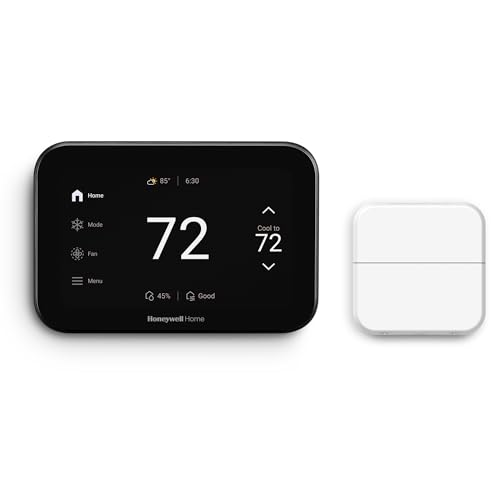
A four-wire wall, and you would rather not buy the adapter
Honeywell Home X8S Premium
$246.99 · ENERGY STAR listed · 2.59 W standby ($3.63/yr) · C-wire: required, adapter in box · 4.9 yr at ENERGY STAR's $50/yr average
C-wire required, and if your system has none the box carries a voucher for a Honeywell C-wire adapter by mail at no cost. Its listing is one of only three in the set that names the heat pump's electric backup stage, it ships a room sensor, and Amazon itself is the seller.
2.59 W standby, $3.63 a year — the highest in the set, about $3.50 a year more than a Nest. $246.99.
-

Rooms that run hot or cold
ecobee Premium
$245.00 · ENERGY STAR listed · 1.83 W standby ($2.56/yr) · C-wire: adapter in the box · 4.9 yr at ENERGY STAR's $50/yr average
Sensor in the box, listed, Siri and Alexa built in, and the Power Extender Kit for a four-wire wall. Buy it for the sensor if one room is the problem; no study in our set shows a sensor lowering a bill.
1.83 W standby, about $2.56 a year; $245, sold on the build date by Cellular express, a third-party seller; Amazon itself had no offer.
-

Alexa household, C-wire present, under $80
Amazon Smart Thermostat
$79.99 · ENERGY STAR listed · 0.89 W standby ($1.25/yr) · C-wire: required · 1.6 yr at ENERGY STAR's $50/yr average
Listed, $79.99. Its page says both things about the money: the bullet credits EPA estimates for $90 a year, the body credits an Amazon study using EPA's method, and ENERGY STAR's own FAQ says about $50. It requires a C-wire, which the title says up front.
Alexa app only; no sensors, no HomeKit, no Matter.
Prices and sellers are what the Amazon buy box showed on 2026-10-17; standby watts and accuracy are ENERGY STAR's. Every pick was buyable that day. The cheap way to solve a four-wire wall would be ecobee's Enhanced at $188 with the Power Extender Kit in the box, and it is not a pick: its offer on the build date came from a third-party seller (ANR TECH) with no ship date. The decode table below carries the same fields, plus the seller, for all 22 bestsellers.
09 / The three claims
"Up to 31%", "$90 a year per EPA", and "no C-wire needed", traced to their sources
Three lines on the listings do most of the selling. Each has a document behind it; here is what the document says.
- Nest Learning listing, both variants
- 31%the largest claim in this set; the listing cites a footnote, and the maker's own spec page prints no percentage 1
- ecobee, on its own savings page
- 26%internal analysis, 'has not yet undergone independent third-party verification' 21
- ENERGY STAR, plain-language average
- 8% · $50/yrthe FAQ figure; the Amazon listing says $90 10
- Indiana randomized pilot, heating
- 12.5% vs 5.0%smart vs standard programmable; cooling not distinguishable 3
- 'No C-wire' units on a heat pump
- C-wireNest and Sensi fine print: heat pump, heat-only and zoned systems need it 1
- Maker The Nest Learning Thermostat can help save up to 31% on heating and cooling bills, from both Nest Learning 4th gen listings; Google's own spec page for the same unit states no savings figure at all. 1
- Maker Save up to 26% per year on heating and cooling costs, from the ecobee Enhanced listing; ecobee's site: based on an internal analysis, not yet independently verified. 21
- Maker According to EPA estimates, ENERGY STAR certified thermostats save an average of $90 on yearly energy bills, from the Amazon Smart Thermostat listing; the body of the same page credits an Amazon study using EPA's method, the two-pack listing of the same device says $50, and $50 is the figure on ENERGY STAR's FAQ. 10
- Maker Designed to work without a C wire in most homes, but for some systems, including heating only, cooling only, zone controlled, and heat pump systems, you'll need a C wire or other compatible power accessory, from the Nest Thermostat listing. 1
10 / Original research
22 Amazon bestsellers, checked against the ENERGY STAR list
Creators API searches on 2026-09-15, against the ENERGY STAR dataset pulled the day before: "smart thermostat", "smart thermostat for heat pump", "wifi thermostat no c wire", "smart thermostat with remote sensor", "thermostat homekit". Match is by brand and model code, with the retail names mapped to the directory's codes by hand (the Honeywell X8S pair is filed under ElitePRO S1100, model X8V*****, whose listed codes include both Amazon models; ecobee's Essential is filed as ecobee 7). Where the directory carries several rows for one model code with different certified accuracies, as it does for the T6 Pro, the table prints the widest value and the decode file records the range.
We took the top results for five Amazon searches (nine per search), removed duplicates, and looked each brand and model up in the 117-row ENERGY STAR connected-thermostat dataset. The table is what the listing claims beside what the list certifies.
- ENERGY STAR listed
- 86%19 of 22 products
- Says heat pump
- 68%15 of 22 products
- Names the heat-pump exception
- 18%4 of 22 products
- Remote sensor
- 41%9 of 22 products
- Matter
- 50%11 of 22 products
- 19 of 22 are on the certified list; the 3 that are not are LUX, Aqara and meross. 4 listed units never mention the certification on the listing.
- 15 listings claim heat-pump compatibility. None uses the words auxiliary or emergency heat; three say 'heat pump with electric backup' and one says 'dual fuel'.
- 12 listings print a savings figure: up to 31% (both Nest Learning listings), 26% (ecobee Enhanced and Premium), about or up to 23% (four Sensi units and ecobee's Essential), 8–16% (Honeywell T5), and $90 and $50 a year (the two Amazon listings of the same device). The certification average is 8%, or about $50.
- Certified standby power among the listed bestsellers runs 0.10–2.59 W: the Nest units are lowest at 0.10 W, the Honeywell X8S pair highest at 2.59 W.
| Product | Price | Sold by | C-wire, per the listing | Backup heat named | Savings printed on the listing | Standby W (certified) | Standby $/yr | Accuracy ±°F (certified) |
|---|---|---|---|---|---|---|---|---|
| Sensi Lite Smart Thermostat | $76.22 | Broheemium | not required (most systems) | — | about 23% | 0.11 | $0.15 | 0.8 |
| Amazon Smart Thermostat | $79.99 | Amazon.com | required | — | $90/yr | 0.89 | $1.25 | 0.31 |
| Google Nest Thermostat | — | — | not required (most systems) | — | — | 0.1 | $0.14 | 0.3 |
| ecobee Smart Thermostat Essential | $135.00 | Forged Standard | adapter sold separately | dual fuel | up to 23% | 0.88 | $1.23 | 0.73 |
| Google Nest Thermostat | $99.99 | Amazon.com | not required (most systems) | — | — | 0.1 | $0.14 | 0.3 |
| Sensi Smart Thermostat | $99.99 | Amazon.com | not required (most systems) | — | about 23% | 0.5 | $0.70 | 0.95 |
| Honeywell Home T5 Smart Wi-Fi Thermostat | $76.98 | VICTORY RK HOLDINGS LLC | required | — | 8-16% | 0.36 | $0.50 | 0.87 |
| ecobee Smart Thermostat Enhanced | $188.00 | ANR TECH | adapter in the box | — | up to 26% | 1.51 | $2.12 | 1.11 |
| Amazon Smart Thermostat | $135.98 | Amazon.com | required | — | $50/yr | 0.89 | $1.25 | 0.31 |
| Honeywell Home X2S Smart Wi-Fi Thermostat | $68.99 | Gryffin | required | — | — | 0.61 | $0.85 | 0.45 |
| Honeywell Home RTH9600WF Smart Color Thermostat ENERGY STAR | $148.69 | XDOT RAN | required | electric backup | — | 0.93 | $1.30 | 0.36 |
| Sensi Lite Smart Thermostat | $79.99 | Amazon.com | not required (most systems) | — | about 23% | 0.11 | $0.15 | 0.8 |
| Honeywell TH6220WF2006/U Lyric T6 Pro Wi-Fi Programmable The | $128.99 | AsanteEnterprise | required | — | — | 0.34 | $0.48 | 0.86 |
| ecobee Smart Thermostat Premium | $245.00 | Cellular express | adapter in the box | — | up to 26% | 1.83 | $2.56 | 1.11 |
| Honeywell Home X8S Premium Smart Wi-Fi Thermostat with Senso | $246.99 | Midwest Estore | required, adapter in box | electric backup | — | 2.59 | $3.63 | 0.63 |
| Sensi Touch 2 Smart Thermostat Wi-Fi | $185.14 | Amazon.com | required | — | about 23% | 1.23 | $1.72 | 1.28 |
| TQX Matter Over WiFi Thermostat with Occupancy and Remote Se | $169.99 | Lux Thermostats | listing silent | — | — | — | — | — |
| Honeywell Home X8S Premium Smart Programmable Wi-Fi Thermost | $259.99 | Amazon.com | required, adapter in box | electric backup | — | 2.59 | $3.63 | 0.63 |
| Google Nest Learning Thermostat (4th gen) + Nest Temperature | $229.99 | Amazon.com | not required (most systems) | — | up to 31% | 0.1 | $0.14 | 0.09 |
| Aqara Smart Thermostat W200 with Apple Adaptive Temperature | $143.99 | AqaraDirect | adapter sold separately | — | — | — | — | — |
| meross Smart Thermostats for Home | $57.99 | Meross Simple Life-US | required (some systems) | — | — | — | — | — |
| Google Nest Learning Thermostat (4th Gen | $233.99 | ANR TECH | not required (most systems) | — | up to 31% | 0.1 | $0.14 | 0.09 |
Standby cost = certified network-standby watts × 8,760 h × $0.16/kWh. Accuracy is ENERGY STAR's static temperature accuracy in °F.
Download the data
- ENERGY STAR ratings for the certified models CSV
- ENERGY STAR ratings for the certified models, same fields JSON
Source records are U.S. government data from ENERGY STAR (EPA). They are in the public domain. Our computed fields (operating cost, annual cost, savings) are licensed CC BY 4.0. Credit: Erin Rose, Verified HVAC Data (verifiedhvacdata.com). The download holds only the ENERGY STAR records and our computed cost. Prices, Amazon listing claims and links stay on this page.
11 / The consensus
What 18 sources say about smart thermostats, and where they split
5 Guidelines · 4 Editorial tests · 6 Maker pages · 3 Community threads
The certification program, two utilities that pay for the thermostat, four editorial tests with named authors, six maker pages and three community threads, in one table. Every row links to the page it came from. The C-wire stance each takes is plotted in the findings above; the savings figure, where one is printed, is in the Recommends column.
| Source | Who | Recommends | Their bottom line |
|---|---|---|---|
| ENERGY STAR, Smart Thermostats program page Guideline · spec in force since 2017-01-01; read 2026-09-15 | U.S. EPA, ENERGY STAR (no byline) | Certifies on field data, not a feature list · no brand; points to the Product Finder for the current list | Certifies on independently verified field savings rather than a feature checklist, and frames the stakes as about half of a $900-a-year energy bill going to heating and cooling. |
| ENERGY STAR, Program Requirements for Connected Thermostats V1.0 Guideline · V1.0 final 2016-12-23; read 2026-09-15 | U.S. EPA, ENERGY STAR (no byline) | Qualifies by aggregate field savings submitted by the maker · a certification spec, not a buying guide | A field-performance standard. Thermostats qualify by demonstrated aggregate savings across installed homes, not by carrying particular features. |
| ENERGY STAR, Smart Thermostat FAQ Guideline · undated; read 2026-09-15 | U.S. EPA, ENERGY STAR (no byline) | Bar: at least 8% less heating and 10% less cooling run time · a national average; EPA says not to apply it to one home | The 8% figure is a field-measured, nationally aggregated run-time reduction, with EPA's own caveat that it should not be treated as a guarantee for any one home. |
| ComEd, ENERGY STAR Smart Thermostat rebate application Guideline · 2025 program year | Commonwealth Edison (no byline) | $75 rebate: ENERGY STAR listed plus one of four system types · no brand named; no savings guaranteed | A flat $75, more for income-qualified households, gated on ENERGY STAR certification and system type. Brand-blind, and ComEd disclaims any savings guarantee. |
| Duke Energy Progress, EnergyWise Home thermostat enrollment Guideline · undated; read 2026-09-15 | Duke Energy Progress (no byline) | $150 first year, $50 a year after, for demand-response enrollment · 10 compatible brands, none endorsed; certification not required | A recurring bill credit for letting the utility nudge the setpoint during peak demand, gated on brand compatibility with its platform rather than on certification. |
| Consumer Reports, 8 Best Smart Thermostats of 2026 Editorial test · 2026-01-01 | Daniel Wroclawski, Senior Home & Appliances Writer, Consumer Reports (lab testing credited to Kathleen Halevah and Joe Chin, roles unspecified on page) | C-wire: most models need one for constant power · ecobee Premium and Enhanced, Nest Learning 4th gen, Honeywell T9; mini-split picks in a separate bucket | System compatibility should drive the pick, not a single ranked winner. CR splits its eight picks into forced-air and mini-split buckets. |
| Bob Vila, The Best Smart Thermostats of 2026 Editorial test · 2026-01-13 | Paul Rankin, Contributing Writer & Editor, Bob Vila (additional contributors: Tony Carrick, Jasmine Harding, Glenda Taylor) | C-wire: the model may require one; some offer power adapters · Nest 4th gen overall, Amazon for value, ecobee Essential, Sensi Touch 2, X2S, T9 | C-wire capability is the load-bearing install question across the guide; picks are split by use rather than ranked to a single winner. |
| Reviewed (USA Today), 10 Best Smart Thermostats Editorial test · 2026-04-02 | Rachel Murphy, Editor, Home, Reviewed (co-bylined with Dr. Dave Ellerby, Chief Scientist, and Marc Saltzman, Contributing Writer) | C-wire: most need one; some work without it or use a conversion kit · Nest Learning 3rd gen overall, Sensi Touch 2, X2S, X8S, ecobee Premium | Sticks with the older 3rd-gen Nest as its top pick even though a 4th gen exists: 'Even a decade after its introduction, it's still the best smart thermostat for most people.' |
| TechGearLab, The Best Thermostat, Lab Tested Editorial test · 2025-10-01 | Austin Palmer, Senior Review Analyst, TechGearLab (contributors David Wise, Katie Melynn) | C-wire: required on most, some run without one; every unit held about 1°F · Nest Thermostat for most, Amazon for value, Nest Learning 4th gen high end, ecobee Premium multi-stage | Every tested unit held within about 1°F of the setpoint, so the split between picks is price and feature tier, not measured accuracy. |
| Google, Nest Learning Thermostat 4th gen specs Maker page · read 2026-09-15 | the maker's own product page | C-wire: works with or without; a C wire or Power Connector needed in under 1% of cases · its own unit, $279.99; heat pump to 3 stages with aux and emergency heat | Broadest stated heat-pump/aux/emergency-heat support and near-C-wire-optional operation among the six maker pages fetched, but states no numeric savings claim. |
| Google, Nest Thermostat specs Maker page · read 2026-09-15 | the maker's own product page | C-wire: designed to work without one; may need one on heat-only, cool-only or zoned systems · its own unit, $129.99; heat pump with aux or emergency heat, not both | Budget Nest model with materially narrower multi-stage/heat-pump support than the Learning Thermostat, and no stated savings percentage. |
| ecobee, Smart Thermostats compare page Maker page · read 2026-09-15 | the maker's own product page | Up to 26% (Premium, Enhanced) and 23% (Essential), from its own April 2021 customer analysis · its own lineup, $259.99 / $199.99 / $139.99; C-wire and system compatibility behind a wizard | A clear savings, certification and ecosystem comparison across three tiers, with C-wire and system compatibility kept behind an interactive wizard rather than stated on the page. |
| Honeywell Home, T9 Smart Thermostat Maker page · read 2026-09-15 | the maker's own product page | C-wire: adapter in the box · its own unit, $209.99; heat pump to 3 heat / 2 cool with emergency heat | Broad heat-pump/multi-stage/ecosystem support with an included C-wire adapter and sensor, but no numeric savings claim. |
| Copeland, Sensi Touch 2 Smart Thermostat Maker page · read 2026-09-15 | the maker's own product page | C-wire: a kit is sold for homes without one · its own unit, $209.99; heat pump 4 heat / 2 cool; no HomeKit or Matter | Widest raw multi-stage/heat-pump spec (4H/2C) of the six maker pages, but C-wire is effectively required via a sold-separately kit, and no HomeKit/Matter support. |
| Amazon, Amazon Smart Thermostat product page Maker page · read 2026-09-15 | the maker's own product page | C-wire required, or a power adapter kit sold separately; about $90 a year by its own study · its own unit, $79.99; Alexa and Ring only | The cheapest unit fetched, and the only one of six maker pages whose own product title states a hard C-wire requirement with no built-in workaround. |
| r/homeautomation, 'HVAC guy said Nest thermostats are bad for furnaces' Community thread · 2018; 383 upvotes, ~357 comments | r/homeautomation thread, 383 upvotes, about 357 comments | Always wire the C, regardless of brand · Nest blamed for marketing the wire as optional; a Honeywell named in the same failure | A C-wire is functionally mandatory for a smart thermostat. Skipping it, which Nest's marketing implies is fine, is the mechanism the technicians blame for the reported HVAC damage, not a brand-specific flaw. |
| r/smarthome, 'I don't want a new Google Nest' Community thread · 2025; 178 upvotes, ~190 comments | r/smarthome thread, 178 upvotes, about 190 comments | Avoid cloud-only control; ecobee named for its HomeKit and Home Assistant fallback · ecobee the most-named replacement for Nest; one reply notes ecobee has retired old units too | Distrust of Google's long-term hardware support is the switching driver here, and ecobee is the most-named alternative, chosen for its local-control fallback rather than cost or specs. |
| r/hvacadvice, 'Please help, I want to replace my thermostat' Community thread · 2025; 145 upvotes, ~115 comments | r/hvacadvice thread, 145 upvotes, about 115 comments | Check line voltage against 24 V before buying anything · Mysa named for electric baseboard; the 24 V units on this page do not fit that wiring | Wiring-type mismatch, not only a missing C-wire, is a recurring failure in this community. Confirm line voltage against 24 V and the C-wire before buying any smart thermostat. |
Where they agree
- Certification is earned on field data. All three ENERGY STAR pages say the label rests on aggregate savings measured in installed homes, not on a hardware checklist, and the FAQ adds that the national figure should not be applied to any one house.
- The money that pays for the thermostat is brand-blind. ComEd's $75 is gated on the certified list plus system type; Duke Energy Progress pays $150 for letting the utility nudge the setpoint and names ten compatible brands without endorsing one.
- All four editorial tests name the C-wire as the install question, and none of the four prints a savings percentage or mentions the 8% bar. Consumer Reports and Reviewed use nearly the same sentence: most smart thermostats require one.
- Only the makers print a percentage. ecobee's 23–26% is its own April 2021 customer analysis against a constant 72°F hold; Amazon states $90 a year from its own study; Nest's and Honeywell's own product pages print none.
Where they split
- Does a smart thermostat need a C-wire? — Nest: works with or without, under 1% of homes need the Power Connector. The four editorial tests: most models need one, some ship or sell an adapter. The self-identified technicians on r/homeautomation: always wire it, and power-stealing is what damages transformers and control boards. The maker pages carry the caveat themselves. Nest names a Power Connector for the cases where power sharing fails, Honeywell puts an adapter in the T9 box, Sensi sells a kit, Amazon prints 'C-wire required' in its title. If the wire is in the wall, connect it; the decode table lower on this page shows what each listing says about the case where it is not.
- How much does it save? — ecobee: up to 26% on its compare page, from its own April 2021 customer analysis. ENERGY STAR: at least 8% of heating run time to qualify, about 8% of the bill on average, and do not apply that to one home. Consumer Reports, Bob Vila, Reviewed and TechGearLab: no figure at all. The 31% and 23% claims are on Amazon listings, not on any page in this panel. The field results in the findings above run from 0% (the 1,385-home randomized experiment) to 12.5% of gas heating (the Indiana pilot). The maker figures come from the makers' own customers against a constant 72°F hold, not from an independent evaluator.
- Which one? — Consumer Reports and TechGearLab lead with ecobee Premium and Nest; Reviewed keeps the 3rd-gen Nest Learning on top; Bob Vila and TechGearLab give Amazon's unit the value slot; r/smarthome is leaving Nest for ecobee over cloud dependence, not specs. Every brand the four tests name is on the certified list, so the certification cannot separate them. This page routes by system type and wiring instead: what the thermostat has to control decides the pick, and the certification decides whether it is in the running.
Who is cited
Who is cited on this page
Named people with a verifiable published position, fetched directly on the build date. Quotes are verbatim from the linked page. No one listed reviewed this page. Wirecutter, CNET, The Verge, Tom's Guide, PCMag, Wired, Forbes Vetted and TechRadar could not be fetched (blocked or truncated), so no bylines from those outlets appear here; the attempts are recorded in the consensus panel download.
- Daniel Wroclawski Senior Home & Appliances Writer, Consumer Reports (lab testing credited to Kathleen Halevah and Joe Chin)
Most smart thermostats require a C-wire so they can receive constant power.
Consumer Reports, "8 Best Smart Thermostats of 2026, Lab-Tested and Reviewed" · 2026-01-01 ↗ - Paul Rankin Contributing Writer & Editor, Bob Vila (co-bylined with Tony Carrick, Jasmine Harding, and Glenda Taylor)
Smart thermostats require more electricity than either manual or programmable thermostats to power their network connections and GPS functions. This means the model you select may require a common wire (also known as a C-wire) that runs from the thermostat to the HVAC system.
Bob Vila, "The Best Smart Thermostats of 2026" · 2026-01-13 ↗ - Rachel Murphy Editor, Home, Reviewed (USA Today) (co-bylined with Dr. Dave Ellerby, Chief Scientist, and Marc Saltzman, Contributing Writer)
Most smart thermostats require a C-wire. Some thermostats will work without it or may require a separate conversion kit
Reviewed.com, "10 Best Smart Thermostats: Keeping home comfortable" · 2026-04-02 ↗ - Austin Palmer Senior Review Analyst, TechGearLab (contributors David Wise and Katie Melynn)
All of the thermostats we tested have great temperature accuracy
TechGearLab, "The Best Thermostat, Lab Tested & Ranked" · 2025-10-01 ↗
Cited without a named author: ENERGY STAR (three pages), ComEd, Duke Energy Progress, Google Nest, ecobee, Honeywell Home, Copeland Sensi and Amazon; their pages are in the sources list. Community threads (r/homeautomation, r/smarthome, r/hvacadvice) are quoted in the consensus panel; individual Reddit usernames are not treated as verifiable published positions and are not listed here.
13 / Questions
Frequently asked
- How much does a smart thermostat actually save?
- ENERGY STAR's average is 8% of the heating and cooling bill, about $50 a year, and its certification bar is at least 8% less heating run time than never setting back. The independent numbers run 5–15% on heating: 12.5% for a Nest against 5.0% for a standard programmable thermostat in the same Indiana pilot, and 12% on heat-pump electricity in Oregon. The largest randomized experiment, 1,385 homes over 18 months, measured no significant change at all, because occupants overrode the schedule. The 23%, 26% and 31% on the listings are the makers' own analyses; ecobee says on its site that its figure is not independently verified, and the 31% listings publish no method. 1031421
- Which smart thermostat is best for a heat pump?
- One whose own documentation says how it handles the electric backup heat, because those strips use substantially more energy than the heat pump technology itself, in the Oregon program's words, and it is the only mechanism here with an independent field result attached: a 12% cut in electric heating across 185 Oregon homes running Nests, with the causal attribution coming from the maker's white paper rather than the evaluator. Google's spec page states heat-pump staging with auxiliary and emergency heat; Honeywell's X8S pair and the RTH9600WF say 'heat pump with electric backup' on the listing. None of the 22 listings uses the words 'auxiliary heat' or 'emergency heat', so the listing is not where you will find this: check the maker's own compatibility page. The Energy Trust of Oregon specification keeps the strips off above 35°F outdoor. 21914
- Do I need a C-wire?
- Usually. Of the 22 bestsellers, 10 need one: 7 say so flatly, 2 include a free adapter or a voucher for it, and 1 says only some wiring needs it. 2 ship the adapter that creates one, 2 sell it separately, 7 say most systems manage without, and 1 does not say. Of the 7, 4 name the exception themselves: a heat pump, a heat-only or cool-only system, or a zoned system needs the wire. Count the wires behind your old thermostat first — five with a C is the easy case. 201
- Is the Nest Thermostat better than the Nest Learning Thermostat?
- For the bill, no. Both are on the ENERGY STAR list, both draw 0.10 W in standby, and the certification does not distinguish learning from a set schedule. The Learning 4th gen adds a sensor in the box, Matter, the documented heat-pump staging and a certified accuracy of ±0.09°F (second on the list to Vivint's ±0.06°F) for $134 more. If you will set a schedule and leave it on a furnace, the $99.99 unit earns the same result. 121
- Is ecobee better than Nest for a heat pump?
- On the pages we could fetch, Google's is the more specific: its spec page states heat-pump control up to three stages with auxiliary or alternate and emergency heat. ecobee keeps its compatibility and threshold detail in an interactive checker and support pages that would not load for us, so we do not state its settings here. Neither is certified as saving more than the other — the certification is granted to the product, not to a feature — so decide on documentation you can read and on the ecosystem you already own. 458
- Why is the Sensi Lite so cheap, and is it any good?
- It is $79.99 because it has no sensors and no learning. It is on the ENERGY STAR list, draws 0.11 W in standby, and its listing says a conventional furnace runs it without a C-wire. The certification is identical to the $247 units'. Its own bullets say a C-wire is required on a heat pump or a heat-only system. 121
- Does the Amazon Smart Thermostat really save $90 a year?
- Its page says both things. The bullet credits EPA estimates for the $90; the body of the same page credits an Amazon study using EPA's ENERGY STAR methodology. ENERGY STAR's own FAQ says about $50, and the two-pack listing of the same device says $50. The device is certified; the $90 is a marketing figure, not a certified one. 101
- Will a smart thermostat work with electric baseboard heat?
- No, not any of the 22 bestsellers. Baseboards and wall heaters switch 120 or 240 V; these thermostats switch the low-voltage control circuit the listings call 'most 24 V systems' and the ENERGY STAR program does not certify above 30 V. You need a line-voltage smart thermostat, one per heater. 8
- Do remote sensors save energy?
- Not that any study in our set shows. 9 of the 22 bestsellers take a sensor and 54 of the 117 certified models list the feature, but no field study we found isolates its effect on the bill. Buy the sensor for the room that runs hot or cold, not for the saving. 12
- Will my utility pay me for one?
- Often, and in two ways. ComEd's 2025 program paid $75 for a thermostat on the ENERGY STAR certified list installed on one of four system types, and closed to applications on 28 February 2026, so check the current year. Duke Energy Progress pays $150 the first year and $50 after for enrolling in demand response, which lets the utility nudge your setpoint on peak days and does not require certification at all — its list is ten compatible brands, Lux among them. So of the three unlisted bestsellers, Lux qualifies at Duke; Aqara and meross qualify at neither. Check your own utility for both kinds. 1167
14 / References
Sources
- 1
- 2
- 3
- 4
- 5
- 6
- 7
- 8
- 9
- 10
- 11
- 12
- 13
- 14
- 15
- 16
- 17
- 18
- 19
- 20
- 21
- 22
12 / Field reports
What 1,395 comments from 197 thermostat threads actually argue about
1,395 thermostat comments · from 197 threads · r/HVAC, r/HomeImprovement, r/LifeUpgrades, r/askHVAC, r/ecobee, r/homeautomation, r/hvacadvice, r/smarthome · 2014-07 to 2026-09
Harvested from the subreddits where people ask what to buy and what went wrong, then filtered to the comments that name a thermostat or a thermostat brand. The shares below are of those comments, not of the whole harvest — a Home Assistant recommendation in a thread about door locks is not a thermostat buyer asking for local control. Every quote is verbatim and links to the comment.
Share of thermostat comments that raise each theme
Wiring is the first thing this community argues about. The threads are photographs of five screw terminals and a question, and the answers are other owners reading the letters back. Where a C-wire is missing the recurring advice is the same as the decode table above: fit the adapter, run the wire, or accept that a heat pump will not be reliable without it.
The most common day-two complaint once the wiring is sorted. The thermostat keeps heating the house — every unit here holds its schedule locally — but the app, the remote setpoint and the reporting go with the connection.
The complaint that lands hardest. A thermostat outlives the service behind it: the maker retires an app, sunsets a server, or is acquired, and a working unit loses the half of itself that made it smart. It is why local control appears as a buying criterion rather than a nice-to-have.
Named as a hedge against the previous theme. ENERGY STAR records how each certified model communicates, and the mainstream retail units report as Wi-Fi: the local-control route is usually a bridge or a hub, not the thermostat itself.
Products the community names most
Reddit search across the six communities, then each thread's comments read from the rendered page; 280 threads and 5,393 comments were harvested, of which 1,395 name a thermostat or a brand and are the denominator here. Themes are keyword matches over that set, each one's quote being the highest-scoring comment that carries both the thermostat term and the theme term. Reddit rate-limited the JSON endpoint partway through; the remainder was read from the HTML page, and 225 thread fetches could not be completed and are not represented.